Artificial Intelligence
As AI reshapes how construction projects are designed, managed, and built, the legal landscape is shifting just as rapidly — and the industry is adopting AI tools faster than the contracts, regulations, and frameworks governing their use can keep pace. That gap is where disputes arise, and where careful counsel makes the difference.
Peckar & Abramson advises general contractors, construction managers, owners, developers, and design professionals across the full spectrum of AI-related legal challenges and opportunities — from program implementation and vendor agreements through risk allocation, liability for AI-generated errors, compensation, and data security. As the country’s largest construction-focused law firm, we bring construction-specific depth, not retrofitted technology law, to every AI engagement.
Experience
AI Advisory Services for the Construction Industry
We understand how AI tools interact with standard project delivery structures, how AI-related risk flows through the contractual chain, and what clients need to protect their businesses as the technology matures. Our work spans the following areas.
Vendor & Licensing Agreements
AI tools typically arrive with licensing terms drafted to protect the vendor — not the contractor. We review, negotiate, and where appropriate draft these agreements with construction-specific risk in mind, addressing:
- Representations and warranties about AI system accuracy and performance
- Indemnification and liability caps for AI-generated errors
- Intellectual property ownership of AI outputs and derivative works, and data rights in project information fed into the system
- Audit rights, uptime obligations, exit provisions, and protection against future changes to model behavior
Risk Allocation Through the Contractual Chain
The most consequential question is often not whether to use AI, but who bears responsibility when its use causes problems. We address this at every tier:
- Flowing AI-related obligations and representations down to subcontractors, suppliers, and vendors
- Limiting owner-facing exposure for AI-related design or coordination errors
- Ensuring subcontract provisions remain consistent with prime contract obligations
- Addressing AI use in design-build and EPC delivery, and in change-order provisions covering AI tool costs and savings
Liability for AI-Generated Errors
As AI is used for design review, scheduling, estimating, quality inspection, and documentation, it creates novel liability exposure. We counsel clients on:
- Standard-of-care implications when AI tools assist licensed design professionals
- Contract language limiting liability for reliance on AI-generated outputs
- Disclosure obligations when AI has been used in deliverables
- Insurance coverage considerations and dispute resolution strategy when AI output is at the center of a claim
Pricing, Compensation & Cost Recovery
AI creates genuine efficiencies — and real questions about how that value is shared. We help clients think through:
- Whether AI tool costs are recoverable as general conditions or overhead
- The impact of AI-driven savings on contract price negotiations and GMP structures
- Change-order documentation when AI identifies scope gaps or differing conditions
- Compensation structures in professional services agreements, and avoiding inadvertent waiver of additional compensation through AI-assisted communications
Implementation & Governance
We guide clients through enterprise-wide AI rollout — identifying legal exposure across workflows, advising on responsible-use policies, and establishing governance frameworks that reduce risk while enabling innovation.
Data Privacy & Cybersecurity
AI systems collect, store, and process large volumes of sensitive information — proprietary bid data, design documentation, personnel and financial records —and the risk profile changes materially once that data flows to third-party vendors. Working with our dedicated Cyber Security & Data Privacy practice, we help clients:
- Evaluate data privacy implications of AI vendor agreements and applicable state and federal obligations
- Establish contractual data protection requirements in vendor and subcontract agreements
- Assess cybersecurity risk from AI integration into project management systems and develop employee data-handling protocols
- Address incident response for AI-related breaches and government-contract data requirements on federally funded projects
Why P&A
AI legal questions in construction are not generic technology questions. They arise in complex, multi-party project relationships; against established risk-allocation frameworks built around AIA, ConsensusDocs, FIDIC, and FAR/DFARS; and in an industry where the cost of error is measured in millions of dollars and, sometimes, human lives. Our attorneys understand how AI tools interact with project delivery and what standard industry documents do and do not say about technology adoption. We also bring an international perspective, advising on projects across a range of legal regimes and standard forms, and our involvement in industry thought leadership — including the DRBF, AAA, FIDIC, and academic institutions — keeps us at the forefront of how AI is reshaping dispute avoidance and resolution. The result is practical insight that goes beyond the transactional.
Professionals
Co-Managing Partner, Miami
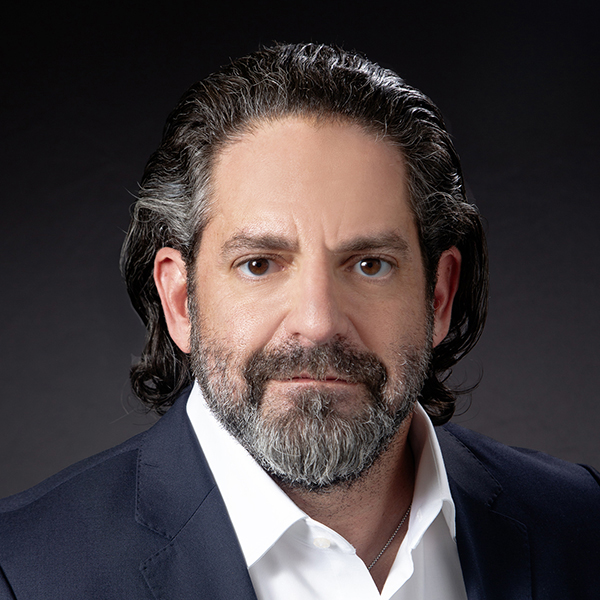
Adam P. Handfinger
Co-Managing Partner, Miami
Partner

Freddy X. Muñoz
Partner
Chair, International Practice

Denis Serkin
Chair, International Practice
Chair, Cyber Security & Data Privacy

Richard R. Volack
Chair, Cyber Security & Data Privacy
Related Practice Areas
and Services